
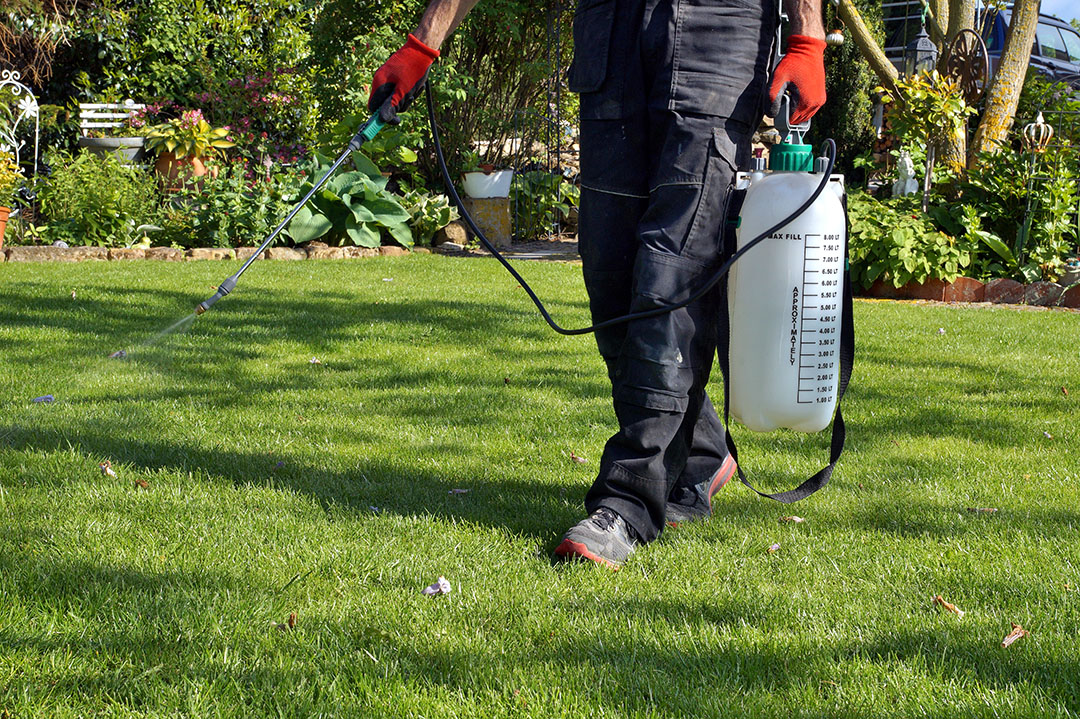

When it comes to weed control, how you apply a herbicide is just as important as the product you choose. Two terms that are often used in lawn care are spot spraying and broad spraying, and while they may sound self‑explanatory, each approach has specific benefits, limitations, and best‑use scenarios.
Understanding the difference between spot and broad spraying helps improve weed control, reduce turf stress, and avoid unnecessary chemical use.
What Is Spot Spraying?
Spot spraying refers to applying herbicide directly to individual weeds or small infested areas, rather than treating the entire lawn surface. The aim is targeted control, placing herbicide only where it is needed.
This method is commonly used when weed pressure is low, weeds are clearly visible, or when undesirable plants are scattered rather than widespread. Because only small areas are treated, the surrounding turf receives minimal chemical exposure.
Spot spraying is particularly effective for larger, easily identifiable weeds where accurate coverage of the leaf surface is achievable.
What Is Broad Spraying?
Broad spraying involves applying a herbicide uniformly across the entire lawn or a large section of turf. This approach is typically used when weed pressure is high, weeds are widespread, or when weeds are small and numerous.
Broad spraying relies on even distribution to ensure all weeds, including those not yet obvious, receive enough herbicide to be controlled. It is commonly used during seasonal weed flushes, such as broadleaf outbreaks in spring or autumn.
While more chemical is used overall, broad spraying can be more efficient and consistent when weeds are well established across a lawn.
Benefits and Limitations of Spot Spraying
The main benefit of spot spraying is precision. By targeting only the weeds, you reduce chemical input and limit potential stress to the turf. This approach is ideal for maintaining an otherwise healthy lawn where weeds are occasional rather than dominant.
However, spot spraying relies heavily on correct identification and good coverage. Missed weeds remain untreated, and small or newly germinated weeds can be overlooked. Spot spraying can also be risky, without a known area you can easily over apply when concentrating directly at a weed versus spraying a large section.
Benefits and Limitations of Broad Spraying
Broad spraying offers consistency and efficiency when weeds are widespread. It ensures all susceptible weeds receive treatment at the same time, reducing the chance of regrowth from missed plants.
The downside is the amount of product used and the turf is exposed to herbicide across the entire treated area, which can increase stress if conditions are poor.
Spot vs Broad Spraying and Dew Presence
As a general rule, herbicide applications are most effective once dew has lifted and leaf surfaces are dry, regardless of whether spot or broad spraying is being used.
Treating Different Weed Leaf Types
Leaf structure has a major influence on herbicide success. Small, flat leaves are generally harder to wet and absorb spray solution. These surfaces repel spray droplets, reducing contact time and absorption.
Broadleaf weeds with thick, hairy, or waxy leaves are much easier, trapping the droplets on the leaf.
The Role of Surfactants in Herbicide Applications
Surfactants are often overlooked, but they play a crucial role in both spot and broad spraying. A surfactant reduces surface tension, allowing herbicide droplets to spread, stick, and penetrate leaf surfaces more effectively.
Surfactants are especially important when targeting weeds with small, waxy, or water‑repellent leaves. Without a surfactant, spray solution may bead up and roll off, significantly reducing herbicide uptake. This is particularly common in Oxalis and Clover.
Choosing the Right Approach
The choice between spot and broad spraying should be based on weed density, growth stage, and lawn condition. Spot spraying suits low weed pressure and targeted control, while broad spraying is more effective when weeds are widespread.
Both methods depend on correct timing, dry leaf surfaces, and good spray coverage. Neither approach compensates for poor conditions or incorrect product selection.
A Smarter Weed Control Strategy
Effective weed control is not just about killing weeds; it’s about doing so with minimal impact on your lawn. Choosing between spot spraying and broad spraying allows you to balance efficiency, selectivity, and turf safety.
When combined with proper herbicide choice, good timing, and the use of surfactants where required, both application methods can deliver excellent results in Australian lawns.